
Vernacular names
(In territories with significant traditional TRAMIL use)
Colombia:
- eucalipto
Honduras:
- eucalipto
Geographical distribution
Native to Australia, widely cultivated throughout the world.
Botanical description
In America many different species have been introduced, almost all of which are used indiscriminately in folk medicine. Furthermore, there is difficulty in its taxonomic identification, also because of hybridisation factors, which is why a detailed description is not presented.
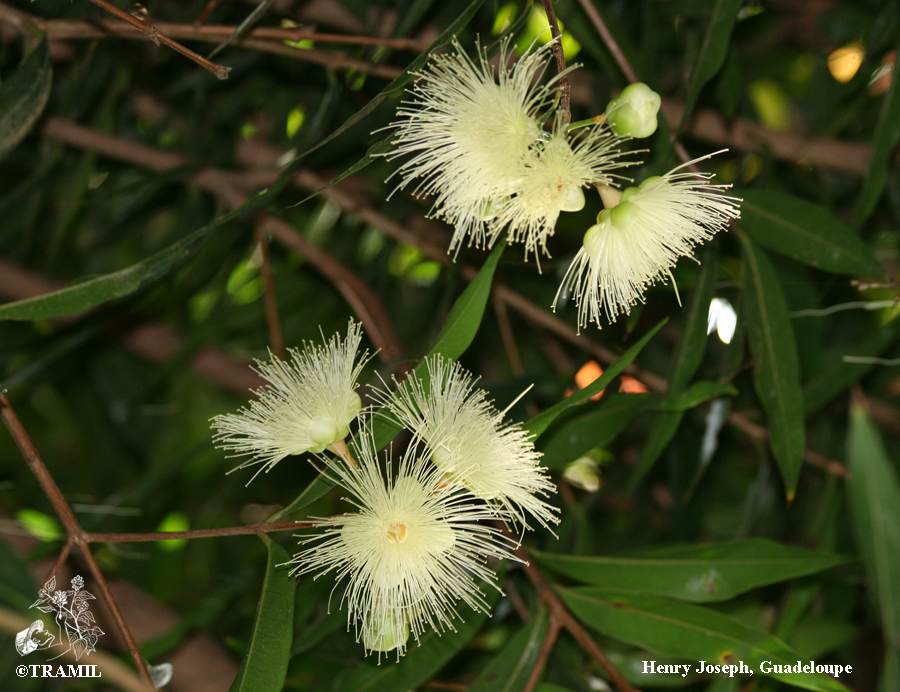
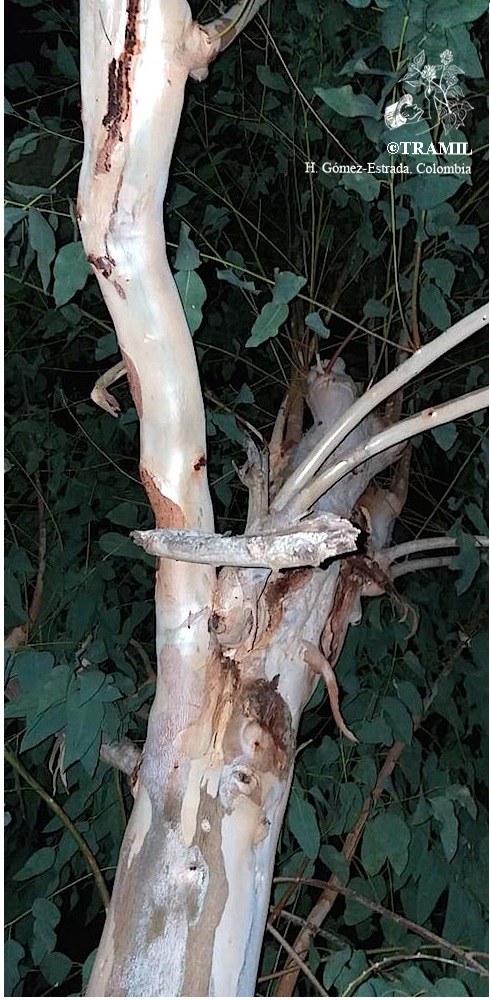
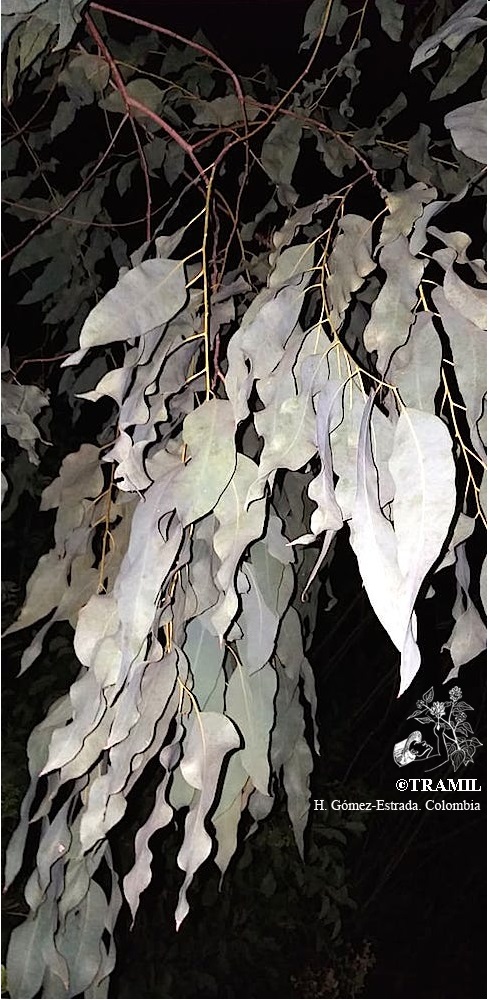
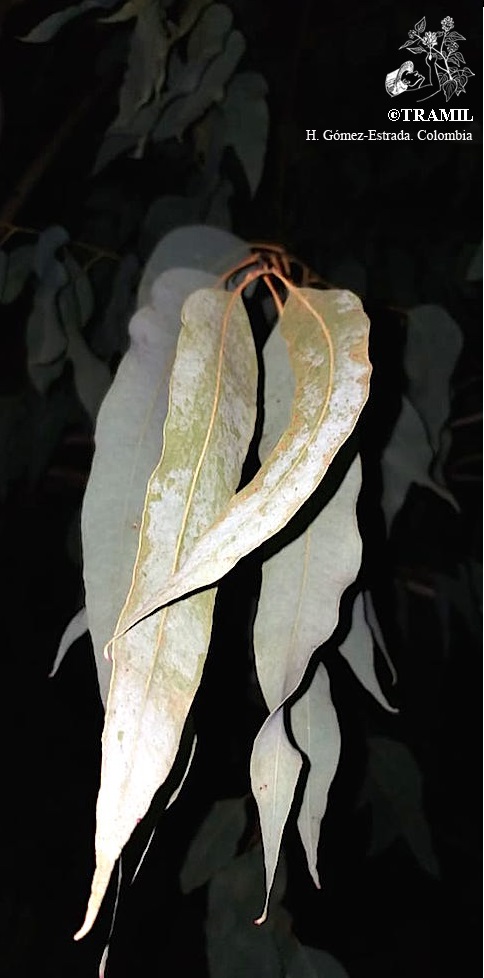
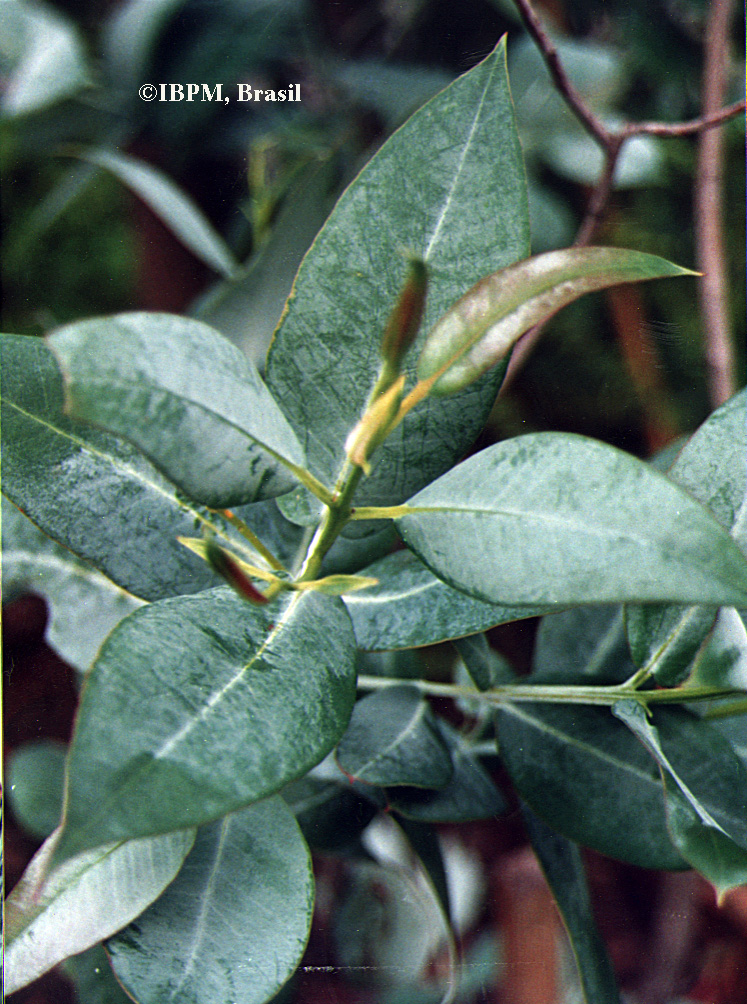
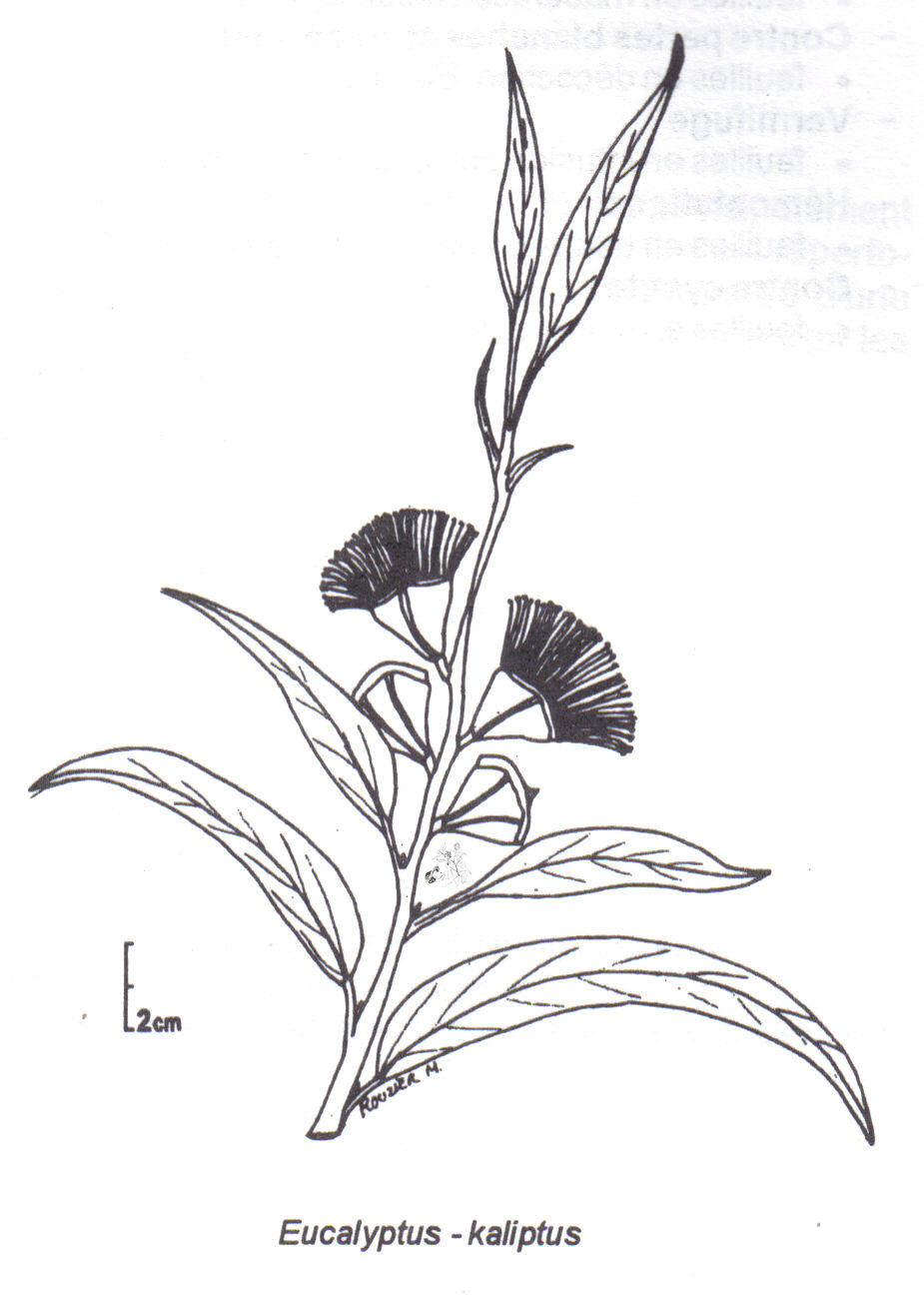
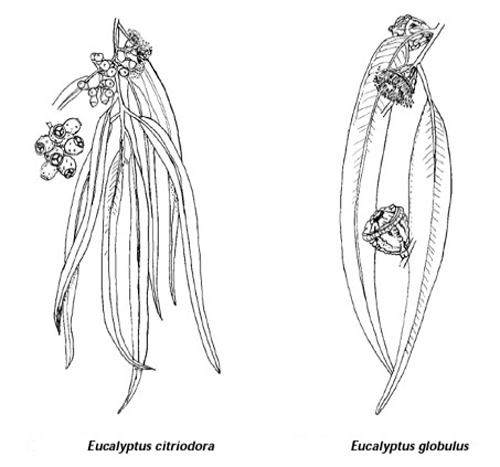
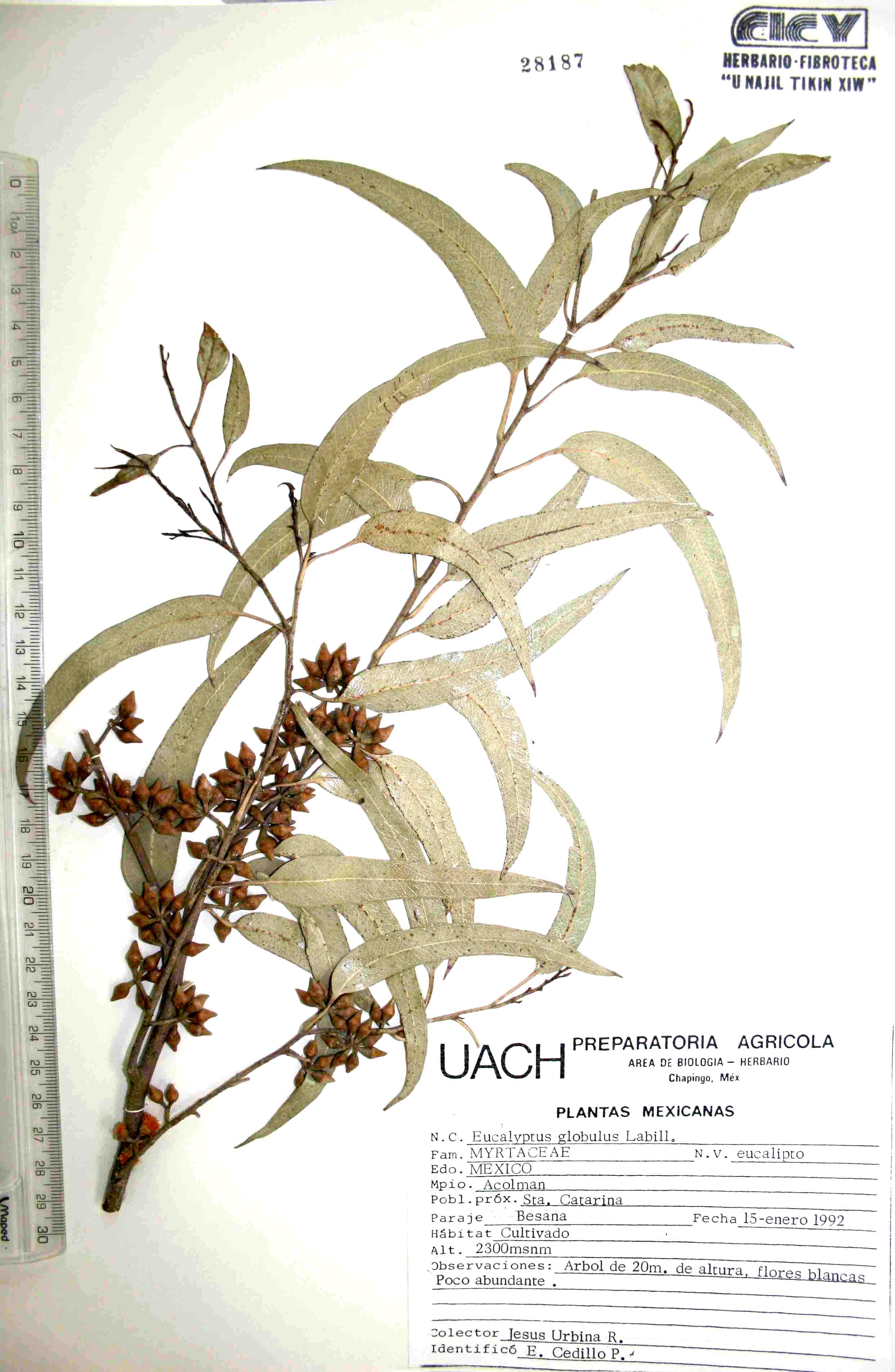
Eucalyptus spp. are trees of up to 40 m in height. Erect stem, smooth, flaky bark. Single, alternate and aromatic leaves. Eucalyptus globulus Labill. A large tree. When young, the leaves are ovate, cordate, embracing the stem or sessile, of greyish green colour. When adult they are petiolate, hanging, alternate,
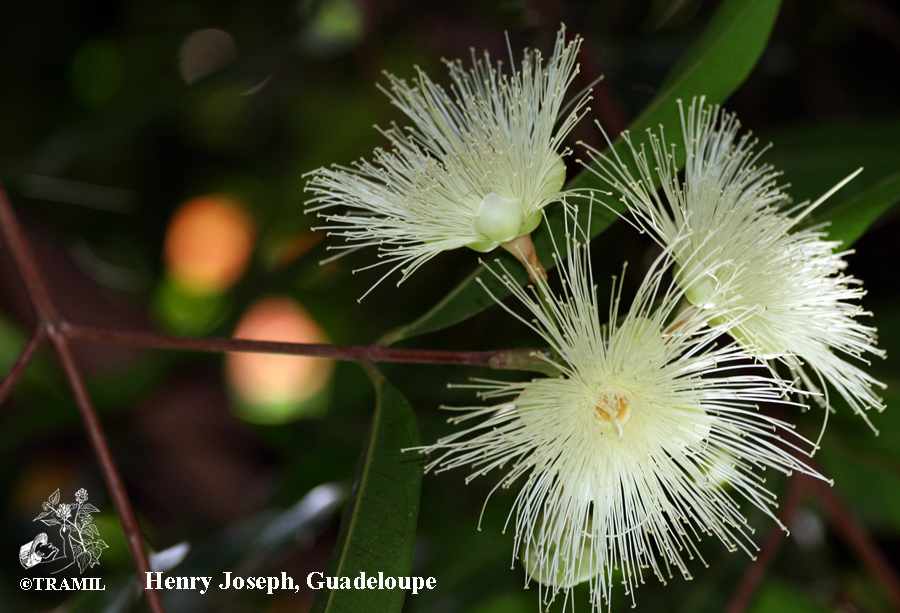
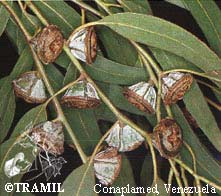
lanceolate, accumulated, brilliant dark green in colour. Axillary flowers, without petals, with a large number of yellowish white stamens. Its fruit is a wide woody capsule in the upper part of 15 mm long and 2.5 cm in diameter.
Voucher(s)
Ochoa,265,HPMHV (E. tereticornis)
Ríos,400,CECALLI (E. camaldulensis)
Mercado,3,CIMCZA (E. cinerea)
TramilCol,21890,CUCV (E. globulus)
Pharmacopoeia
Ed.3References
1 LAGOS-WITTE S, 1988-89, 1996
Encuesta TRAMIL. Laboratorio de Histología Vegetal y Etnobotánica, Dep. de Biología, Universidad Nacional Autónoma de Honduras UNAH, Tegucigalpa, Honduras.
2 GOMEZ H, GAITAN R, DIAZ F, 2003
Encuesta TRAMIL (Norte del departamento de Bolívar). Grupo de Productos Naturales, Facultad de Ciencias Químicas y Farmacéuticas. Universidad de Cartagena, Cartagena de Indias, Colombia.
3 PDR for Herbal Medicines, 2003
Eucalyptus globulus. The PDR® for Herbal Medicines, PDR Electronic Library, Medical Economics Company, PhytoPharm US Institute for Phytopharmaceuticals, Metuchen, USA, www.mdcc.edu/medical/library/catalog2.htm (28feb2003)
4 SOOD VK, RIER JR JP, GHOSH RC, 1987
A gas-liquid chromatograph analysis of oil from young and old leaves of Eucalyptus citriodora Hooker. Parfuem Kosmet 68(8):495-498.
5 FERNANDEZ RR, SURI RK, 1981
Studies on the oil of Eucalyptus citriodora Hook, grown at Dehra Dun. Indian Forestry 107(4):243-248.
6 SHEN YB, YU Z, 1986
Chemical constituents of Eucalyptus citriodora leaves. Part I. Linchan Hua Hsueh Yu Gong Yi 6(3):28-31.
7 ATAL CK, SRIVASTAVA JB, WALI BK, CHAKRAVARTY RB, DHAWAN BN, RASTOGI RP, 1978
Screening of Indian plants for biological activity. Part VIII. Indian J Exp Biol 16:330-349.
8 LOPES SAMPAIO AT, 1992
A utilizaçao da soluçao natural de eucalipto nas nebulizaçoes, como auxiliar nos tratamentos das inecçoes respiratórias agudas (IRA).R Bras Enferm Brasilia
45(2/3):183-186.
9 PARIS R, MOYSE H, 1981
Précis de Matière Médicale. Paris, France : Ed. Maloine.
10 GARNIER G, BEZANGER-BEAUQUESNE L, 1961
Ressources médicinales de la flore française. Paris, France : Ed. Vigot Frères.
11 DUKE J, 1992
Handbook of biologically active phytochemicals and their bioactivities. Boca Raton, USA: CRC Press.
12 ALONSO JR, 1998
Tratado de fitomedicina. Bases clinicas y farmacologicas. Buenos Aires, Argentina: Ed. ISIS S.R.L. p840.
13 JOUAD H, MAGHRANI M, EDDOUKS M, 2004
Hypoglycemic activity of aqueous extract of Eucalyptus globulus in normal and streptozotocin-induced diabetic rats. J of Herbs, Spices & Medicinal Plants
10(4):19-28.
14 ASWAL B, BHAKUNI D, GOEL A, KAR K, MAHROTRA B, MUKHERJEE K, 1984
Screening of Indian plants for biological activity: Part X. Indian J Exp Biol 22(6):312-332.
15 DHAR ML, DHAR MN, DHAWAN B, MEHROTRA B, SRIMAL R, TANDON J, 1973
Screening of Indian plants for biological activity: Part IV. Indian J Exp Biol 11:43-54.
16 DUKE J, 1977
Phytotoxin tables. Crc Crit Rev Toxicol 5:189-237.
17 ANON, 1988
Eucalyptus citriodora oil. Food Chem Toxicol 26(4):323.
18 PAGES N, FOURNIER G, LE LUYER F, MARQUES M, 1990
The essential oils and their potential teratogenic properties: Example of the essential oils of Eucalyptus globulus preliminary study with mice. Plant Med Phytother 24(1):21-26.
19 DUKE J, 1988
Handbook of Medicinal Herbs. Boca Raton, USA: CRC Press.
20 SPOERKE DG, VANDENBERG SA, SMOLINSKE SC, KULIG KK, RUMACK BH, 1989
Eucaliptus oil, 14 cases of exposure. Vet Hum Toxicol 31(2):166-168.
21 CARBALLO A, 1995
Cálculo de concentración y dosis de las drogas vegetales TRAMIL: Mensuraciones farmacognósticas y aproximaciones técnico-clínicas. Laboratorio
Provincial de Producción de Medicamentos, Sancti Spiritus, Cuba.
22 KOSSMANN I, VICENTE C, 1992
Salud y plantas medicinales. Buenos Aires, Argentina: Editorial Planeta Tierra. p113-115.